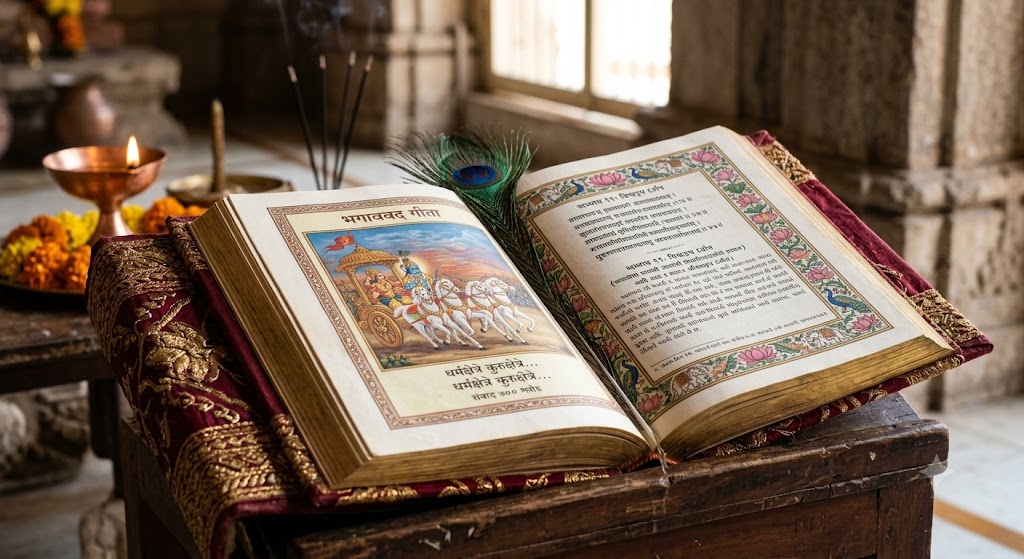
“Karma”: Born in a Hindu family in India, I was raised to believe that Karma is the most important factor governing our lives. The primary understanding of Karma was that “ कर्मण्येवाधिकारस्ते मा फलेषु कदाचन”, which means, “Do your duty, and do not be anxious about the results.” And the other aspect was, “Do good, and goodwill comes back to you”.
And these beliefs became the core of my way of living my life, which honestly is difficult in a capitalist society and today’s world. Yet, I always tried my best in my efforts to be a kind and compassionate person, if I could not always be good, then at least I would try not to harm anyone. I tried my best to fulfil every responsibility with complete honesty, sincerity, integrity, and to be, overall, a genuine and authentic person.
Whenever I saw others enduring trauma, facing severe hardships, or losing loved ones, a deep fear would strike me: it wasn’t that I had an easy life; it had its own struggles and ups and downs, but my outlook towards life had always been positive and optimistic; I tried to approach every struggle with strength and move forward.
My thought process when I witnessed people around me facing traumatic situations from time to time would be that perhaps there was a possibility that some of their actions in the past were connected to the circumstances they were facing in the present. I have always been a kind person, not wishing anyone harm, so surely my life wouldn’t have anything traumatic.
Then life hit catastrophically, and I lost my only child in an accident.
This was a trauma that I was not ready to face.
But when has life ever given us a warning about changing its course?
Life turned me into a numb state during the initial days and months, and nothing made sense. The world seemed to have stopped; everything moved in a mechanical manner without making any sense.
The question “Why me?” used to haunt me day and night. I used to lie awake at night recounting every action of mine, even from my childhood days, trying to understand what I had done so grave in my life that I was receiving such a punishment.
I used to wonder: Had I cheated someone? Had I put somebody’s life in jeopardy? If not, then why me?
The haunting question led me to doubt the concept of Karma; did it even exist, or is it just a myth?
Or was I misunderstanding the concept of Karma? Was I wrong in living my life according to my own understanding and knowledge of Karma?
And what was the real meaning of Karma?
My search for answers to these haunting questions led me to delve deep into spirituality. During the first year, I did not know what I was searching for and where to begin. I started talking to mothers who had gone down the same journey, who shared their means of looking for answers. The easiest way for me to begin, in my present state of mind, was listening to podcasts. I started listening to people from various backgrounds and spiritual leaders talk about Karma and why certain individuals have to pass through suffering.
The search also motivated me to read summaries of religious books and delve further deep into the concept of Karma. I had a vague understanding of past lives, but it was during this quest that I began gaining deeper insights into the concept of Karma.
Diving into this deep, complex topic, I would often stop midway whenever there was an idea that was newfound and brought out a different perspective on situations. The concept of Soul contract and soul family was completely unfamiliar to me; likewise, the first time when some books and podcasts mentioned the linkage between Karma and past lives, it felt surreal.
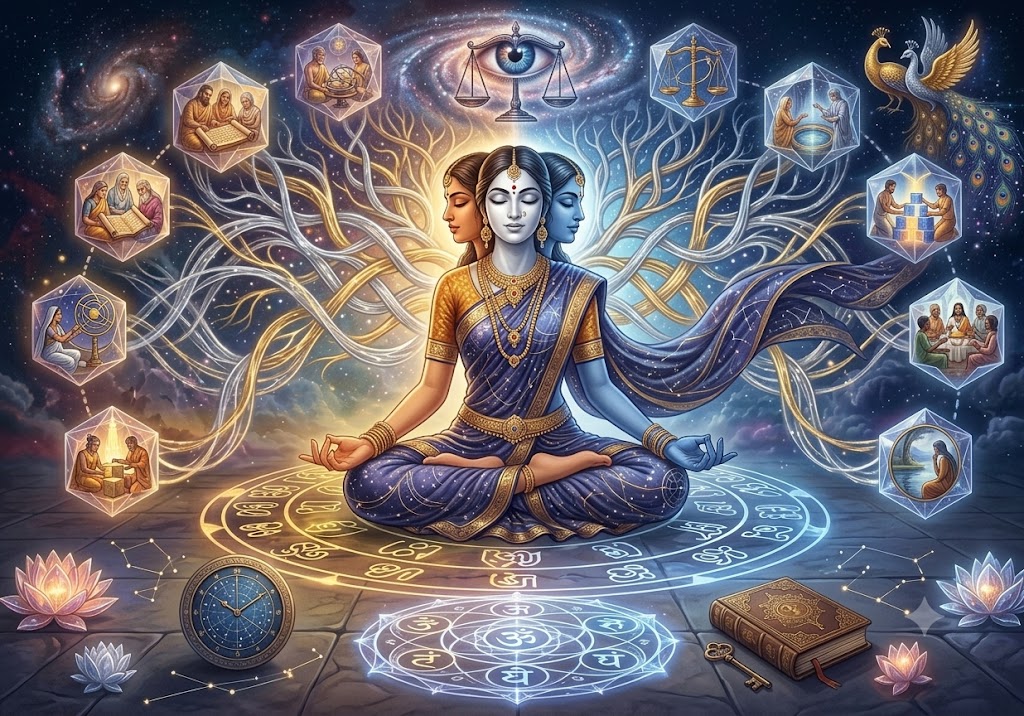
And finally, till today what I have gained, according to my understanding of certain Hindu spiritual and philosophical teachings, is that Karma has a linkage with all the lives that our soul has journeyed through. It does not mean that whatever good you do in this lifetime will necessarily come back to you in this lifetime. My understanding was that Karma is more like a balance sheet of your soul; the soul carries forward the consequences of its actions, and this journey extends beyond one lifetime.
This also means that as humans, we do not remember the actions of our previous lifetime, but the soul does. The soul carries its own continuity of experience and learning; this concept has also been discussed in contemporary spiritual thought through ideas such as the “soul contract” or “soul agreements.”
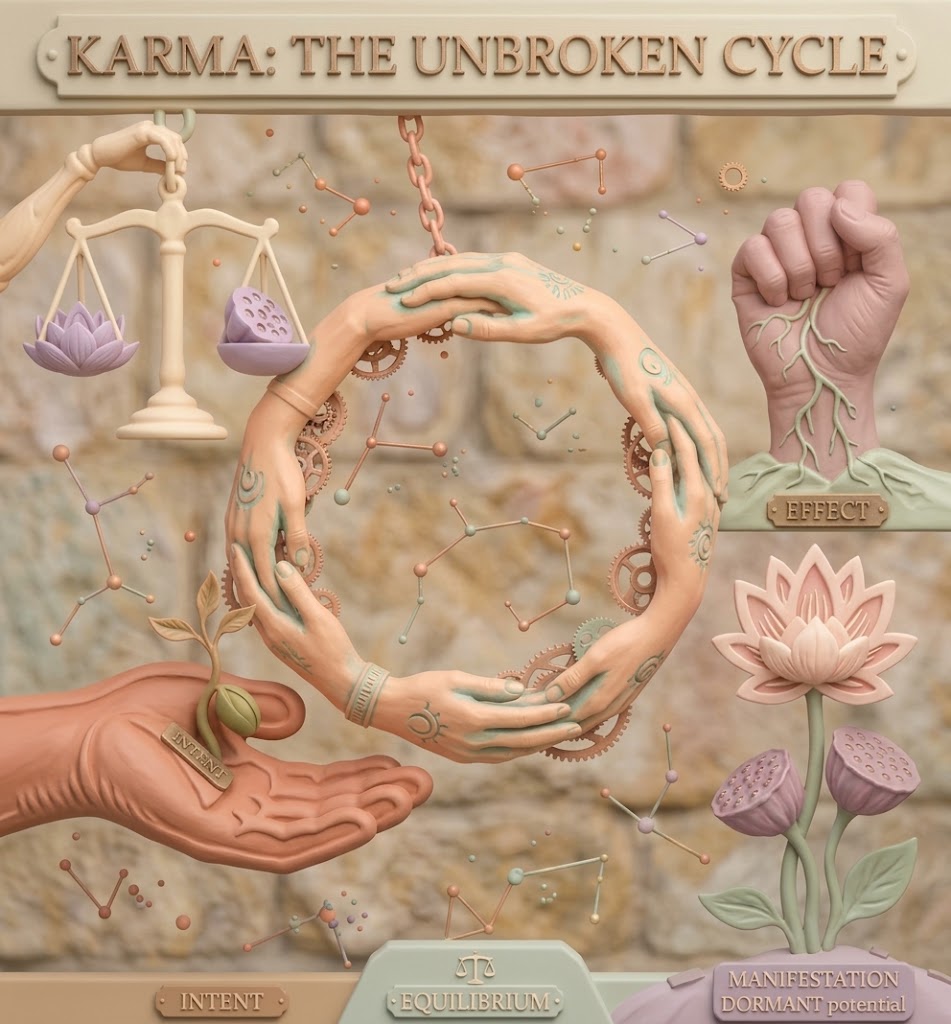
Karma isn’t like a boomerang: doing a good deed simply so that good comes back to you; it is much more profound and continuous. It is about the consequences of our actions and the continuing journey of the soul. Whatever actions we have taken are believed to have consequences that may extend beyond a single lifetime.
The soul is understood, in some spiritual interpretations, to undertake experiences through which it continues to learn and evolve. This understanding did not give me an answer to why my son transitioned so early in life or why I am still here. However, it allowed me to consider that there might be a larger, sacred purpose to enduring this pain.
It led me to handle my pain more gracefully and accept that life has to be lived until its natural end, which is destined for every individual. It also made me realise that it is not necessary to look at death as the ultimate ending, but perhaps as a transition from one room to another. There may be other lifetimes in which I could once again be with my son, although the relationships and circumstances might be different.
Even today, I am not in a state of mind where I completely accept all these concepts. Some days they do feel like a narrative, which has been created to give some peace to the grieving minds.
The deeper spiritual understanding of Karma has made me more capable of accepting that the life that we live is more than our circumstances; it is also about remaining connected to our own selves while fulfilling our worldly duties and responsibilities.
Have I mastered my knowledge of Karma? No. What I have learnt is only the tip of the iceberg, and the learning is something that will continue, because it is such a vast and complex topic. What began as a search for answers to the most painful questions of my life has now become an ongoing journey of learning, questioning, and seeking.
It has allowed me to look beyond my immediate grief and view death not as stagnation, but as a continuation—an onward movement toward spiritual evolution.
Karma did not give me an answer to why I lost my son. Instead, it gave me a different way of looking at the question.
Perhaps acceptance does not always come from understanding why something happened. Sometimes, it comes from accepting that we may never fully understand, and yet choosing to continue the journey.
That, for me, has been the most profound role Karma has played in my acceptance of grief.

